Malaysia’s decision to ease rare-earth export restrictions will give US-backed companies greater access, challenging Australian producer Lynas.
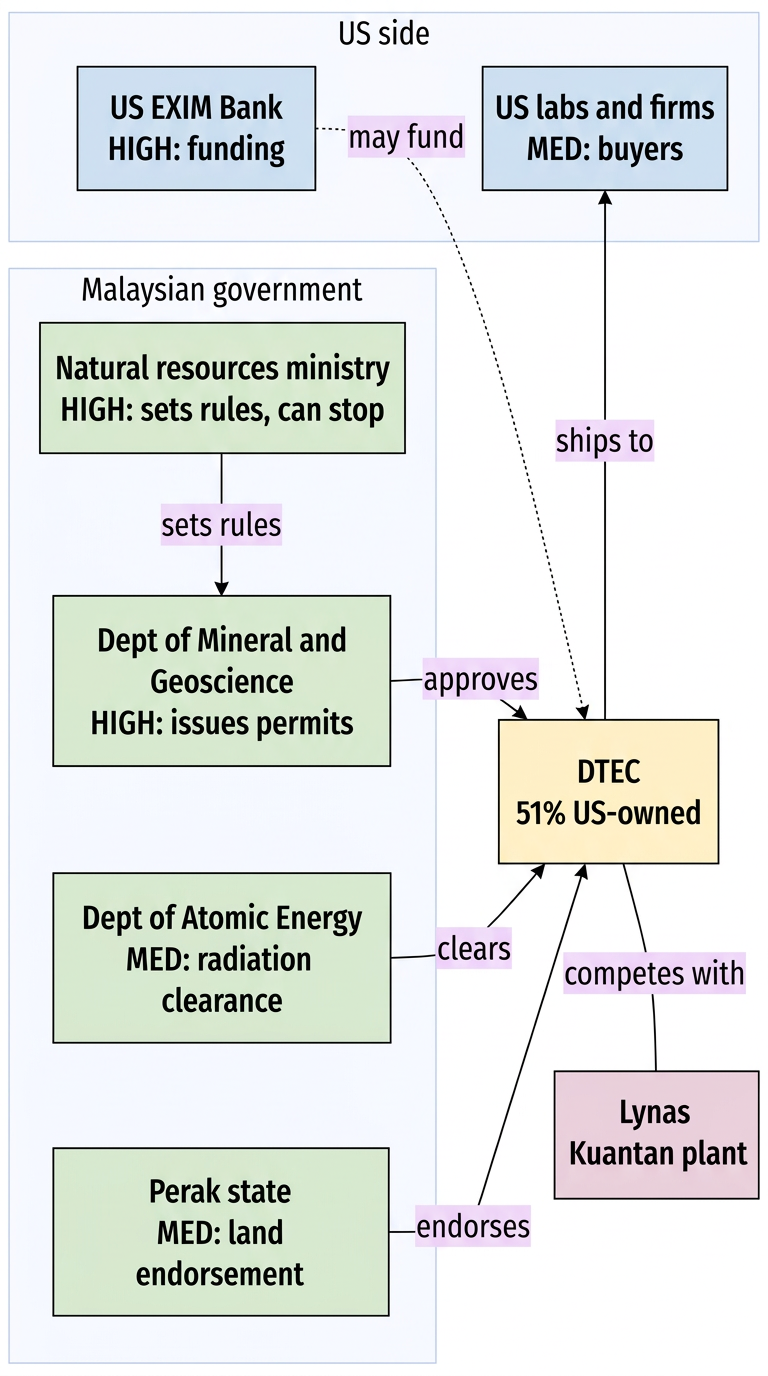
In October 2026, Malaysia eased its ban on raw rare-earth exports, allowing shipments for research or processing. Since the ban began in January 2024, only a Chinese-linked pilot project in Perak had received an exemption. The new rules require exporters to commit to processing rare earths locally, encouraging investment in Malaysian refineries. On 27 October, DTEC Mineral and Metal Technology received the first permit under the new rules, covering up to 700 tonnes of rare-earth carbonate. US investors own 51% of DTEC, and the US Export-Import Bank has expressed support for up to US$650 million in financing. Meanwhile, Lynas earned A$977.9 million in FY2026 and is investing A$294 million to expand heavy rare-earth production. However, it still relies mainly on raw materials from Australia. DTEC’s early access to Malaysian supplies could therefore push Lynas to secure local sources faster, as more US companies enter the market and compete for export permits.
Ask Bilbyabout it
Carry the prediction into a question: what has changed since, who decides, and who is exposed.
More from Malaysia
4 predictions on Malaysia so far, newest first.
See what we’reseeing next.
New predictions in the Asia Daily Take, free every weekday, and in Bilby whenever you have a question.
Get the Asia Daily TakeTry Bilby