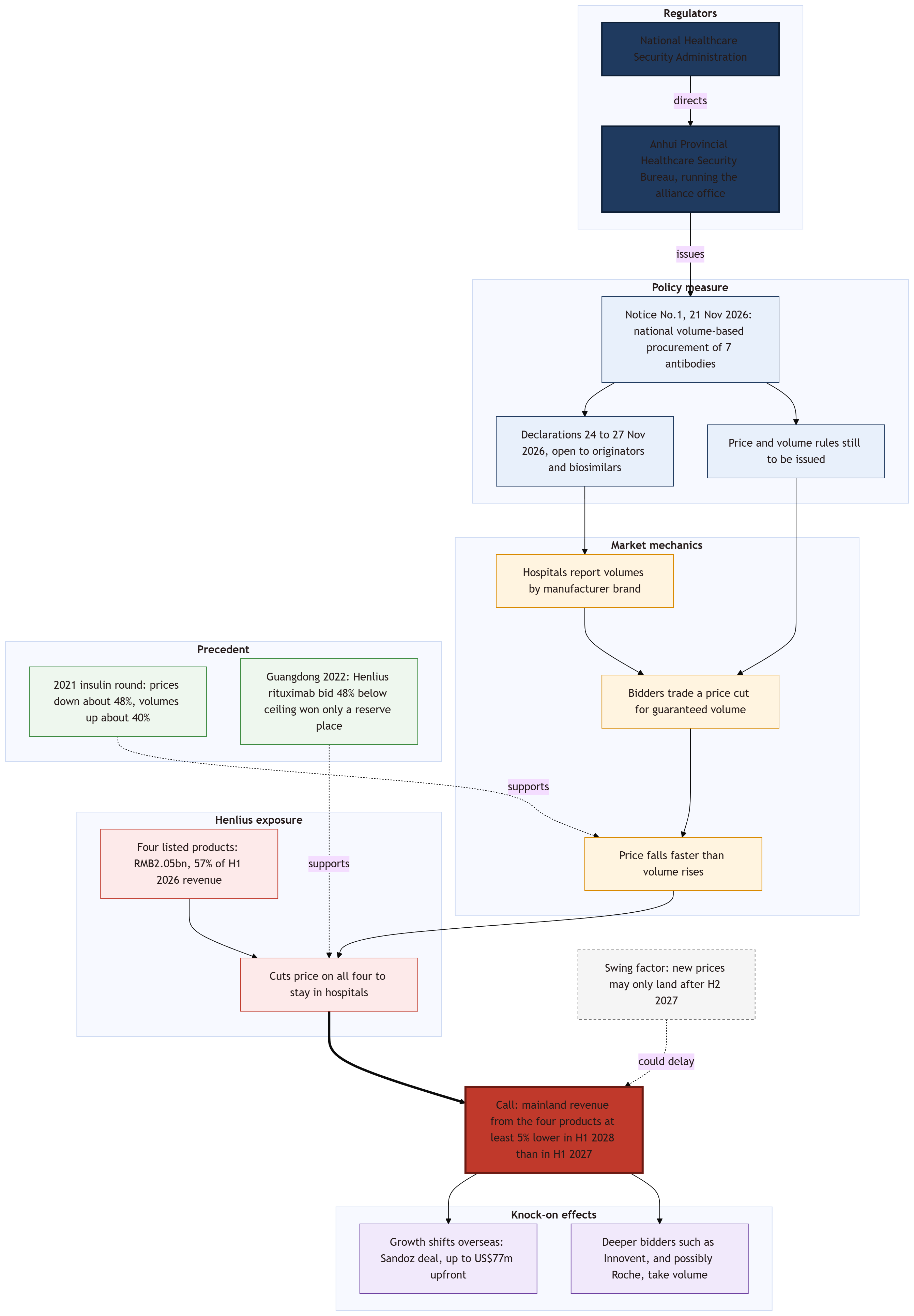
Shanghai Henlius Biotech's mainland revenue from its trastuzumab, bevacizumab, rituximab and adalimumab products will be at least 5% lower in the first half of 2028 than in the first half of 2027.
On 21 November 2026 China's national antibody purchasing alliance opened declarations for its first volume-based procurement of seven monoclonal antibodies ahead of hospitals reporting volumes by manufacturer brand. Henlius's four products on the list earned about RMB2.05 billion in the first half of 2026, which was 57% of group revenue and about 12% more than a year earlier. The 2021 insulin round cut prices by 48% on average and lifted volumes about 40%, so total value still fell by about a quarter. In Guangdong in 2022 Henlius's rituximab bid came in 48% below the ceiling price yet won only a reserve place while Innovent won with a cut of about 59%. Henlius is therefore likely to give up price on all four products without winning enough extra volume to offset it. That pushes its growth towards overseas licensing, where Sandoz agreed in August to pay up to US$77 million upfront for a first batch of products.
First reported byEconomic Information Daily
Ask Bilbyabout it
Carry the prediction into a question: what has changed since, who decides, and who is exposed.
More from China
42 predictions on China so far, newest first.
See what we’reseeing next.
New predictions in the Asia Daily Take, free every weekday, and in Bilby whenever you have a question.
Get the Asia Daily TakeTry Bilby